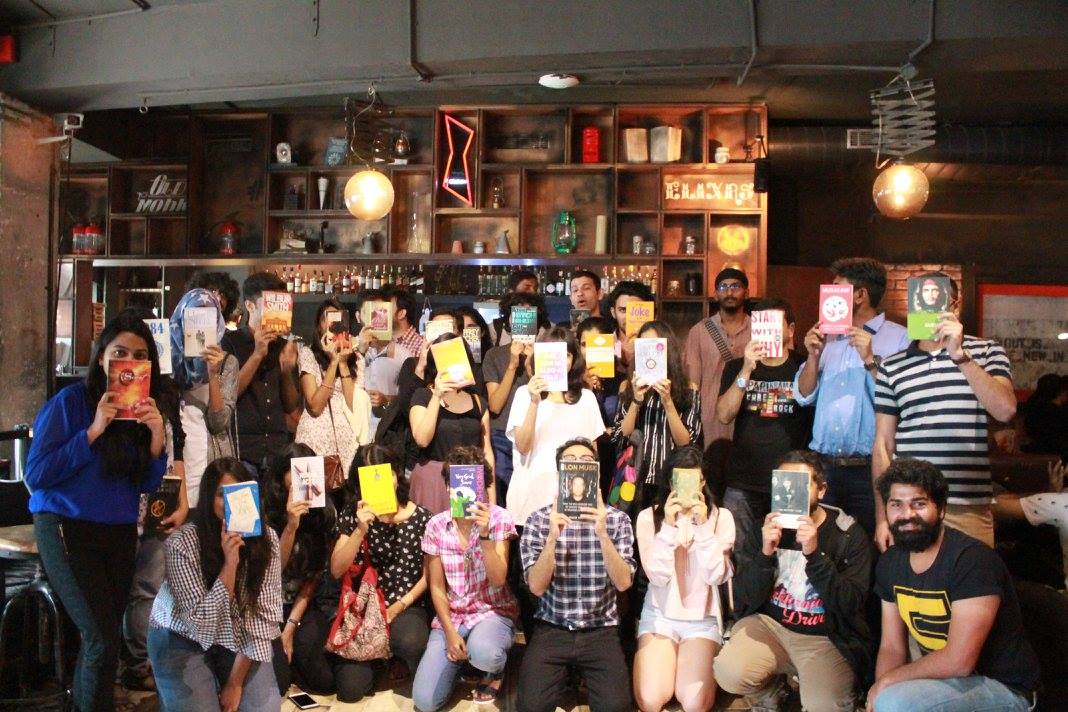
In 2017, before "community-led growth" became a LinkedIn slide, I started Sip and Swap — an offline meetup format built around one simple idea: strangers exchange a book for a book, over a cup of tea, coffee, or a pint of beer. It cost almost nothing to run. It produced more brand value than any paid campaign I'd ever attempted.
Between 2017 and 2020, the format ran in 5 cities — Mumbai, Delhi, Bangalore, Pune, and Hyderabad — 15+ events, 1,000+ participants, and over ₹50L in organic press. I never pitched a single article. The format did the work.
This post is the honest version: how it started, what worked, what didn't, and what I'd do differently if I were starting today.
The Original Event Description (2017)
Before the lessons, here's what Sip and Swap was — in the words I used to describe it at the time. This is the actual About copy from the event page:
Sip and Swap is a book swap party where strangers exchange a book for a book with each other over a drink.
Why are we doing this?
With a generation who has easy access to things right on their fingertips and pretty much occupied with the world wide web, we felt there was a need to take them offline. Get them to do something as simple and uncomfortable as having a conversation.
With the help of the book swap party, we are not just promoting reading books and getting book readers together — but getting them to do something they wouldn't otherwise do: talk to strangers, meet new people, and most importantly start building their own stories with interesting experiences.
Reading it back nine years later, two things stand out. First, the language was deliberately small — "as simple and uncomfortable as having a conversation". Second, the product wasn't the book swap at all. The book was the excuse. The actual product was permission to talk to a stranger.
That distinction — between the visible mechanic and the underlying need it served — is the lesson I carried into every GTM project after.
Why Community First (Before Product)
Most founders start with a product and try to retrofit a community around it. The conversion math rarely works: you build, you launch, you discover your messaging is off, you iterate. Community-first inverts that. You build the audience, learn their language, then ship a product that already has demand.
Three reasons community-first wins:
- Real-time feedback. A 50-person event teaches you more than 500 NPS responses. You see body language, hesitation, excitement. You can't fake-read a room.
- Distribution for free. A good event makes people post about it without being asked. The PR is organic because the experience was real.
- Trust compounds. Showing up in person, repeatedly, is the cheapest way to earn brand permission to sell later.
The companies most worried about "scaling" community early are the ones that need community most. The depth of 100 true fans beats the breadth of 100,000 lurkers every time.
Where the Idea Actually Came From
The idea was born on a flight back from Goa. The stranger in the seat next to me was a European on his way home, and we both happened to be reading. The book sparked the conversation — and once the conversation started, it didn't stop.
At some point I asked him, "Tell me something I wouldn't otherwise know." He told me that the wine he buys in Europe for 2 dollars sells in India for 10× that. We talked for the rest of the flight. I never saw him again.
That's the moment the idea landed: the book wasn't the point. The book was the catalyst. Strangers with books in hand have a free, low-stakes excuse to talk to each other. I just had to package that into something that felt fun, engaging, and shareable.
The concept I landed on: Sip and Swap — where strangers exchange a book for a book. Simple enough to explain in five seconds. Specific enough to be photographed.
The First Event — January 2017, A Cafe in Mulund
The first event was tiny. January 2017. A cafe in Mulund. About 12 people — almost all close friends I'd asked to come as a favour. And one stranger who travelled all the way from Dadar because he'd seen the post and wanted in.
That stranger was the biggest outcome of the entire evening. He's the one who told me afterwards, "You have to do this again." So I did. The second event went viral.
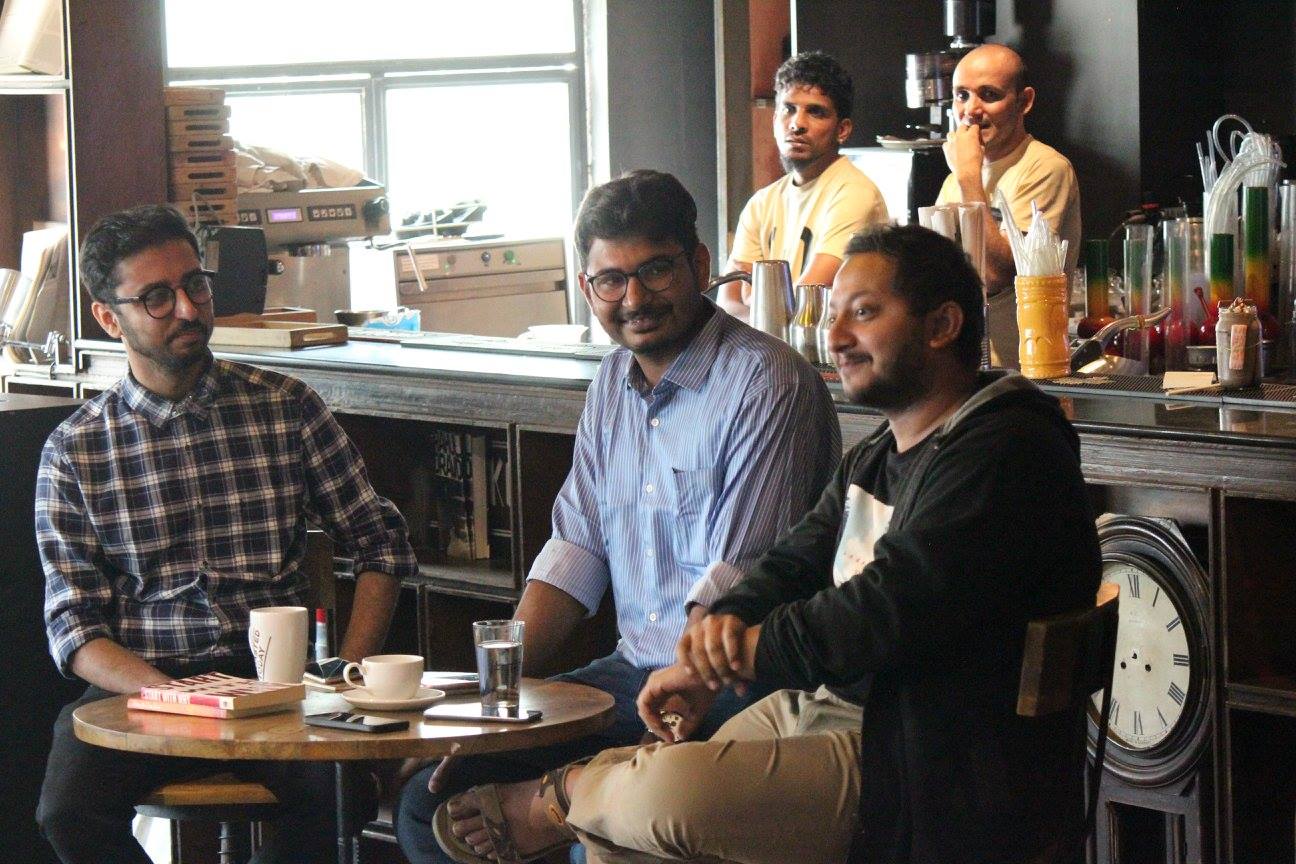
Community doesn't grow because you marketed it. It grows because every event makes the next one easier to fill — and because one person becomes the reason you don't quit.
How an Event Actually Ran — Watch
If you want to see the format instead of just reading about it — the room, the pitching, the 5-minute swaps, the energy — here's footage from one of the events.
Watch the format in action — books pitched, swaps made, strangers becoming friends.
A Book Launch in Collaboration with HarperCollins
Once the community had some reach, the collaborations started arriving instead of us chasing them. The one I'm proudest of: a book launch we co-hosted with HarperCollins India — folded into the Sip and Swap format so the launch wasn't a stiff publisher event, it was a book-swap party with the author in the room.
That's the moment I knew the format had earned brand permission. Publishers don't co-host with you because you have a logo — they co-host because their audience already trusts the room you're building.
Sip and Swap × HarperCollins India — a publisher book launch run inside the Sip and Swap format.
The 4 Things That Worked
What Drove the Compounding
The book as a catalyst, not the point
The actual swap took five minutes per pair — pitch your book, listen to theirs, swap if both of you wanted to. The conversation that started during the pitch is what people came back for.
Curated like a party, not a meetup
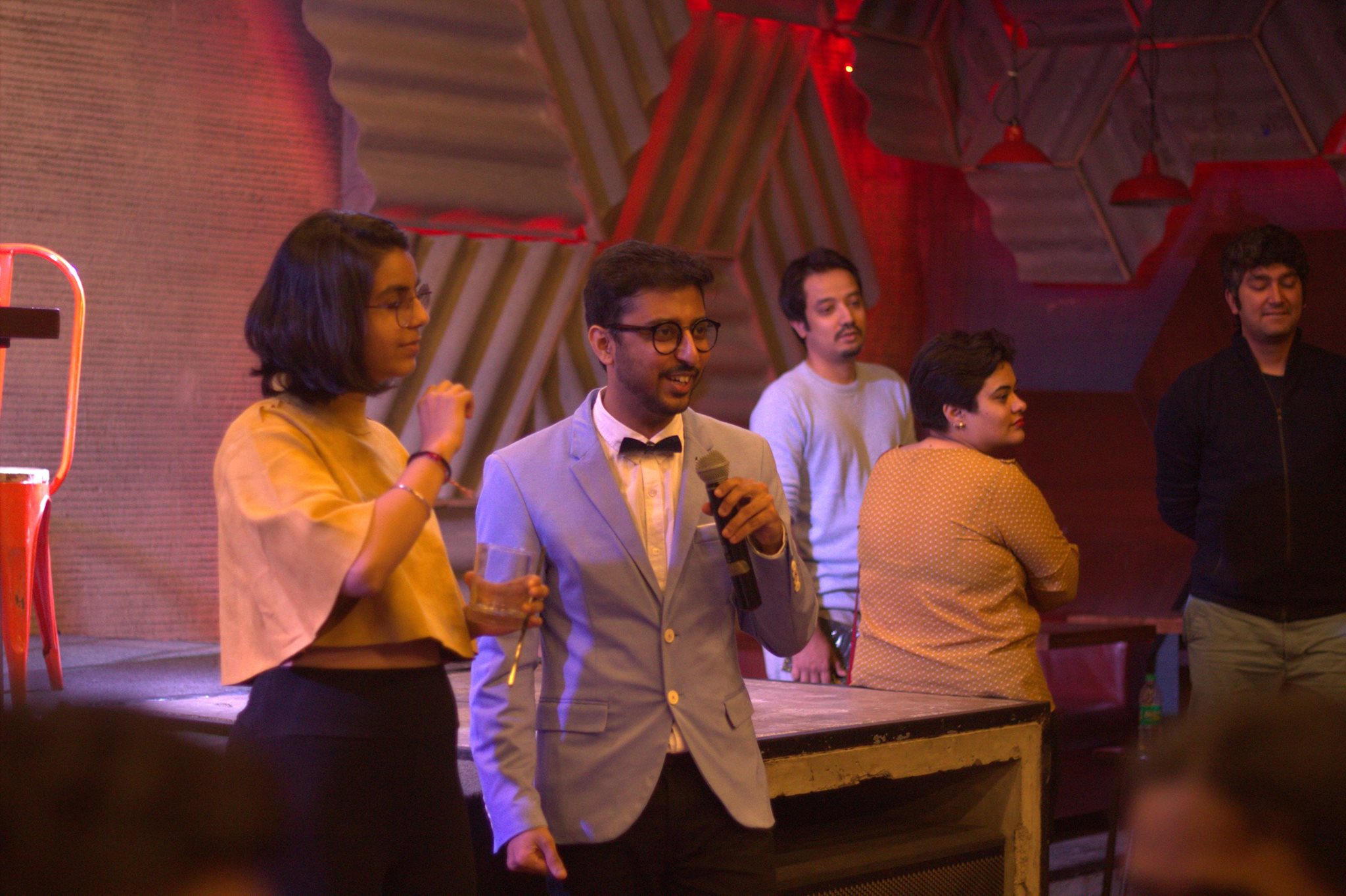
Each event ran as a multi-act night — a short film screening, a theatre piece, a Let's Talk segment with a guest, then the swap rounds. Attendees got a stamp on their book and on their hand, the same ritual you'd get walking into a club night. The energy was the product; the books were the excuse to be in the room.
Free + curated
Free to attend, but RSVP via a Google Form with one human question. The curation made it feel exclusive without being expensive.
Cross-city playbook
The format scaled to Delhi, Bangalore, Pune, and Hyderabad after Mumbai. New cities were hosted by people who'd attended in another. The format was a kit — venue checklist, run-of-show, social templates. Local hosts owned execution.
How We Filled the Rooms and Tried to Pay for Them
Two problems sat alongside each other from event two onwards: distribution (how do we fill rooms in cities we don't live in?) and unit economics (who pays for the venue, the drinks, the design, the time?). Neither was perfectly solved. Both got clever enough to keep the show running for three years.
Growth Hack 1 — Influencers, Before "Influencer Marketing" Was a Playbook
This was 2017–2018. Influencer marketing as a discipline barely existed in India; brands were still figuring out whether to pay creators in cash, free products, or "exposure." I went the opposite direction: I gave influencers free tickets. Not to post on their grid in exchange. To show up.
The pitch was simple and asymmetric: they had nothing to lose. They got an evening out, met genuinely interesting strangers, grew their offline presence in a room full of curious people, and walked away with content that wasn't a brand collab. In exchange, they tagged us, talked about it on stories, and brought their friends to the next one. A few of them gave their plus-ones away as free tickets to their followers — which was the actual growth lever, because it turned each influencer into a mini distribution channel.
Cost to us: a free ticket, which had no marginal cost since the room was paid for already. Return: organic reach to exactly the crowd we wanted — curious, social, urban, readers.
When a creator economy is still forming, you can buy attention with experiences instead of cash. The window closes fast — once influencers learn their market rate, the asymmetry disappears. We caught the window.
Growth Hack 2 — Venues as a Growth Channel (Both Ways)
This was the single biggest unlock. A lot of the best venues in Mumbai aren't run directly by their owners — they're managed by external PR and marketing companies whose job is to keep the venue full, in the press, and culturally relevant. Those PR firms are always looking for genuinely novel events to fill calendar gaps and generate organic coverage for their venue clients.
The first wave was outbound: I pitched the PR firms directly. Sip and Swap was novel enough to be a story journalists wanted to tell — strangers swapping books over drinks is the kind of headline that writes itself. So instead of paying for venues, I traded the format for the room.
The second wave was inbound — and this is the part that took me by surprise. Once the first few events ran clean and the press coverage started landing, venue marketing teams started reaching out to us directly. They'd seen the photos, read the listings, and wanted Sip and Swap on their calendar to lift their own brand. Partnering with PR firms was just one channel; once the format had earned brand recognition, the venues themselves became the inbound channel.
The trade was clean:
- We brought: a novel format, a curated crowd, and inbound media interest
- They brought: the venue, the bar setup, often the AV and a budget for drinks
- The venue got: press coverage, foot traffic, and the cool-factor of hosting the event
It was a three-way win that scaled. Once the playbook worked once, it became repeatable across cities — Delhi, Bangalore, Pune, Hyderabad all ran through similar venue partnerships, brokered some via PR firms and some via direct venue inbound.
Monetisation — What We Tried (Honestly, Weakly)
I want to be straight about this: the monetisation playbook never became strong. But it wasn't for lack of trying. Here's what I attempted, in roughly the order I tried them:
- Ticketing — Paid entry for some events. Worked at small scale, but pricing for a curated free-feeling event is fragile — push too high and you kill the casual energy that made the format work.
- Drink revenue share — The venue agreed to share a cut of bar sales because we brought the crowd. Margins were fine, absolute numbers were small.
- Brand sponsorships — Once Sip and Swap had brand recognition, a few brands reached out inbound. I onboarded a handful, but I never built a repeatable sponsorship motion — every conversation was bespoke, no rate card, no media kit, no follow-up sequence. Each deal was a one-off.
The honest read: these revenue streams paid for the events themselves and a bit of growth on top. They never paid me a salary. They never funded the app properly. By the time I needed real money to scale a product, the runway was already running out.
Growth hacks are cheap and addictive. They make you feel like you're winning, because rooms are filling and press is happening. But "rooms full" is not the same as "business viable." If you're going to build a product on top of a community, you need a sponsorship or product playbook as repeatable as your growth playbook — not a stack of one-off deals.
The 3 Mistakes I'd Avoid
Mistake 1 — No repeatable monetisation playbook
I had monetisation experiments — ticketing, bar revenue share, ad-hoc sponsorships. What I didn't have was a repeatable motion. Each sponsorship was a custom conversation, no rate card, no follow-up sequence. By event 8 we had 600 people who loved the brand and no productised offer ready for them. If I did it again, I'd treat sponsorships and a paid offer (workshop, paid membership, anything) like a sales pipeline from event 3 — with a list, a script, and a calendar — not as ad-hoc inbound.
Mistake 2 — Underweighting digital follow-up
The energy at events was electric. The 48-hour digital follow-up was anaemic. A simple "what you missed" email after each event would have doubled retention. We didn't do it because it felt "salesy." That was lazy thinking.
Mistake 3 — Hero-host dependency
Two of our 5 cities ran beautifully because of one extraordinary local host. When she moved jobs, both cities collapsed inside a quarter. The lesson: design your community so it doesn't depend on heroes. Co-host pairs, written playbooks, succession plans.
Community without monetisation is a hobby. Community without a written playbook is a fragile hobby. Both are fixable — but only before you have 1,000 participants.
The App That Came Too Late
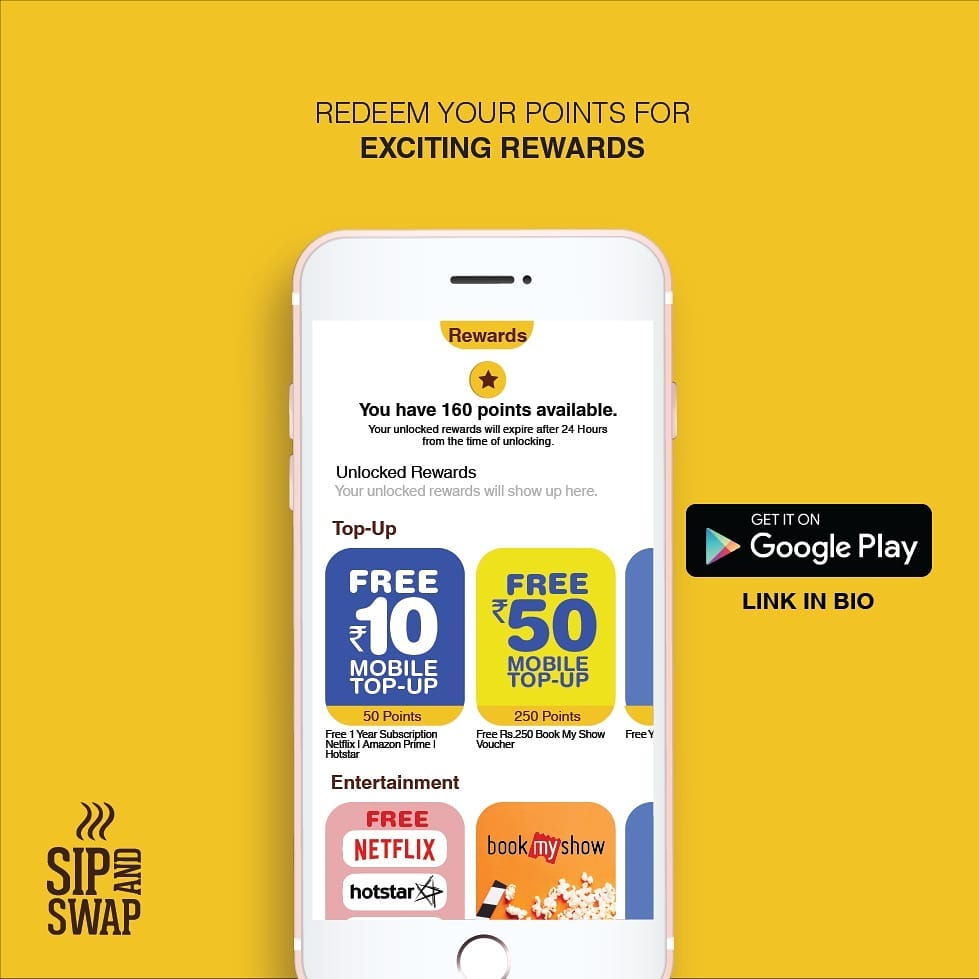
I did eventually build a product on top of the community. The thesis was clean: Sip and Swap was about putting your phone down and talking to a stranger — so I built an app that rewarded people for not using their phone. India's first "go offline, get rewarded" app. Earn points for staying off your screen, redeem them for top-ups, Netflix, Hotstar, BookMyShow vouchers.
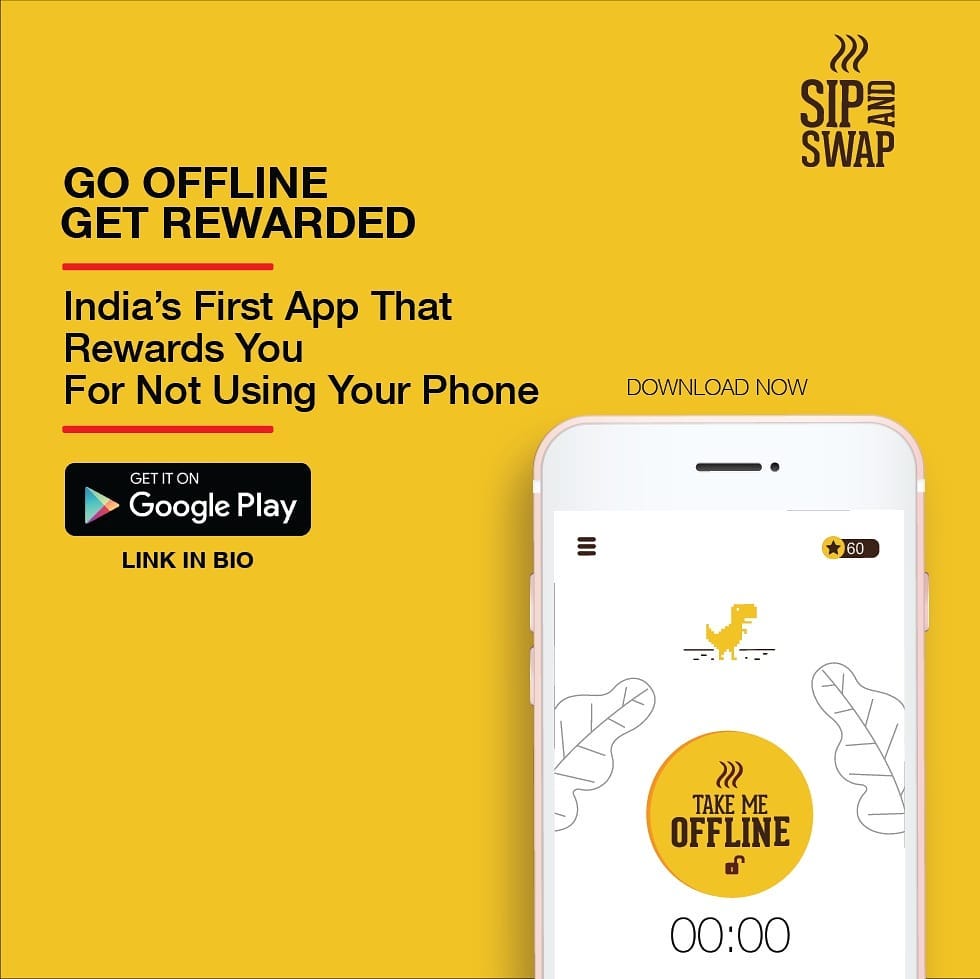
By the time the app shipped, the runway was thin. Building a consumer mobile app — even a simple one — burns capital fast, and I was funding the community entirely out of pocket. Marketing the app needed a budget I no longer had, and the motivation that comes from cheap, fast event wins was much harder to find when the work shifted to retention curves and store rankings.
The app worked. It just didn't get the resources, or the years, that a real consumer product needs to find escape velocity. If I were doing it again, I would have monetised the community by event 3 — even with a small paid workshop — and given the app a 12-month runway before launch instead of building it on fumes.
The lesson isn't "don't build the product." The lesson is: build it while the community is growing, not when the personal runway is shrinking. Motivation is cheap when audience is compounding and expensive when it's flat.
What I Actually Learned (Beyond the Format)
Three years of running this taught me lessons that have very little to do with book swaps. They're the lessons I've carried into every B2B and consumer GTM project since.
Community Is the Distribution Channel
Marketers spend years and budgets building distribution. Community gives you distribution for free — but only if you treat it as one. Every Sip and Swap attendee was a potential channel: they brought friends, they shared photos, they pulled their own audiences in. The mistake most founders make is thinking of community as a marketing output. It's a marketing input. The events were the product; the distribution was the byproduct; both compounded only because we designed them to.
Digital and Offline Are One Ecosystem, Not Two
Sip and Swap looked like an offline event. It actually ran on a four-loop ecosystem that fed itself:
- Instagram and digital pulled people to events
- Events generated content (photos, video, quotes, attendee posts)
- That content brought new people back into the digital funnel
- Influencers and press amplified each loop in both directions
None of the parts worked alone. The events without the digital wouldn't have scaled past Mumbai. The digital without the events wouldn't have stayed authentic. The ecosystem was the product — and that's the framing I now bring to every GTM build. Channels don't compete; they compound when designed to feed each other.
Value Creation Isn't Just Revenue
Some of the most valuable things Sip and Swap generated weren't money. A working relationship with HarperCollins. Press coverage that taught me how to position a brand. Friendships that turned into clients five years later. Operating muscle from running 15+ events across 5 cities with no team and no playbook.
If you'd asked me at the time, I would have measured value in ticket sales and follower count. Today I measure it in optionality — the things this work made possible later that I couldn't have predicted from inside the work. The community didn't make me rich. It made everything I did after the community easier, faster, and more credible.
Value isn't only the cheque at the end of the month. It's the doors that open three years later because of who you became while building the thing.
A Good Idea Earns Media That Money Can't Buy
Brands spend lakhs trying to engineer press coverage. Sip and Swap got into Mumbai Live, LBB, Insider, Ishq FM, and a stack of other features without a PR budget — because the idea itself was novel enough to be a story journalists wanted to tell. A good idea is its own distribution.
This is the most enduring lesson I took into B2B GTM work. Don't optimise for what you can pay for. Optimise for what the world will carry for you because it's actually interesting. If your launch needs a six-figure PR retainer to get noticed, the idea probably isn't sharp enough yet. Sharpen the idea first; the press will follow.
How to Apply This to Your Brand
If you're a founder thinking about community-first, here's the 4-step starter:
- Find your "swap." What's the one tactile action your audience can take that would be photo-worthy? It should be specific, not "talk to each other."
- Run event zero with friends. 20–30 people. Free venue. Document obsessively. The goal is to learn the format, not to grow.
- Build the playbook on event 2. Before you scale to another city, write the run-of-show, the social templates, the venue checklist. Future-you will thank you.
- Define monetisation by event 3. Even if it's just "I'll sell a ₹2,000 workshop at event 5." Write it down.
Stop thinking of community as a marketing channel. Think of it as a product. It has UX, retention, monetisation. Treat it that way and it will compound.
A Few Photos from the Run (2017–2020)
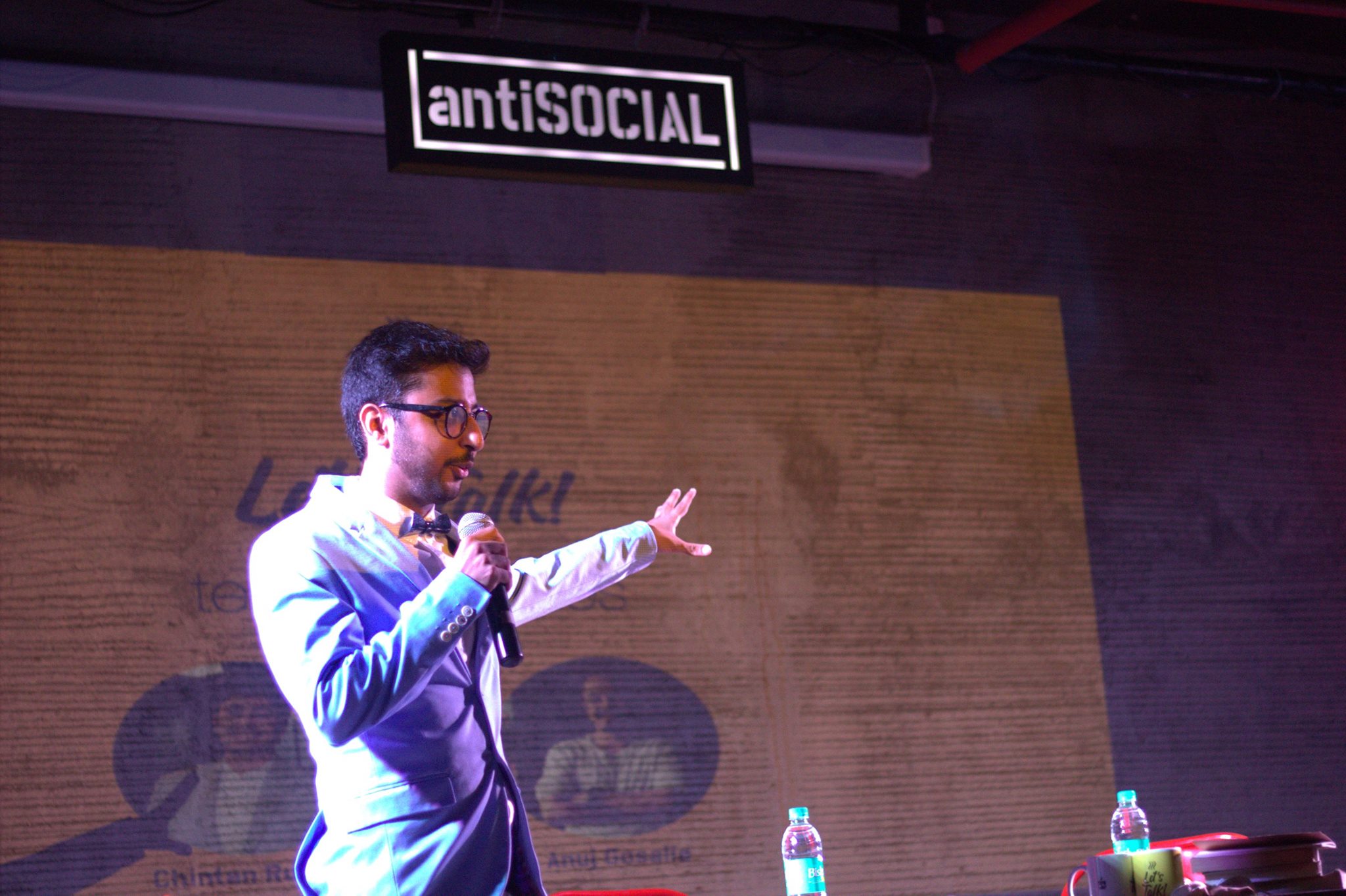
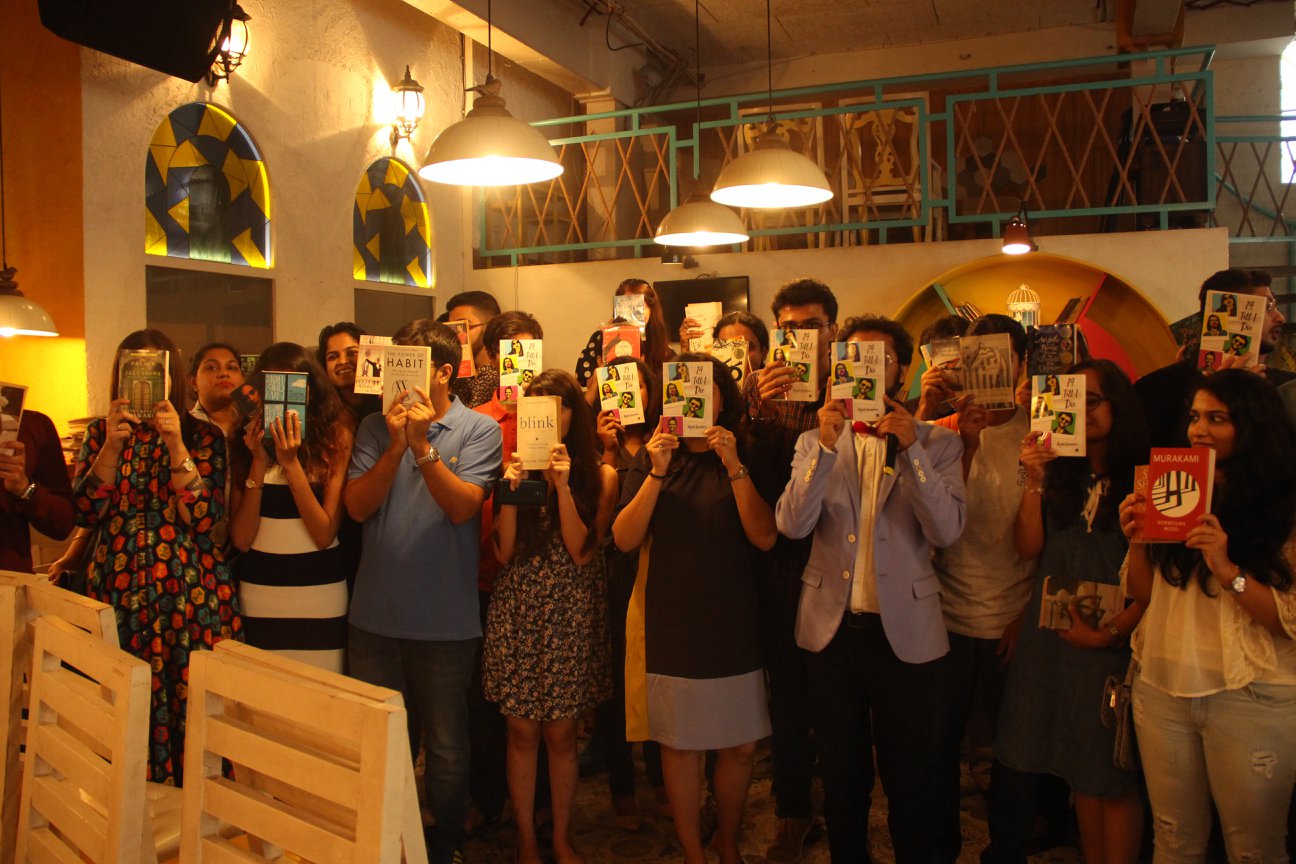
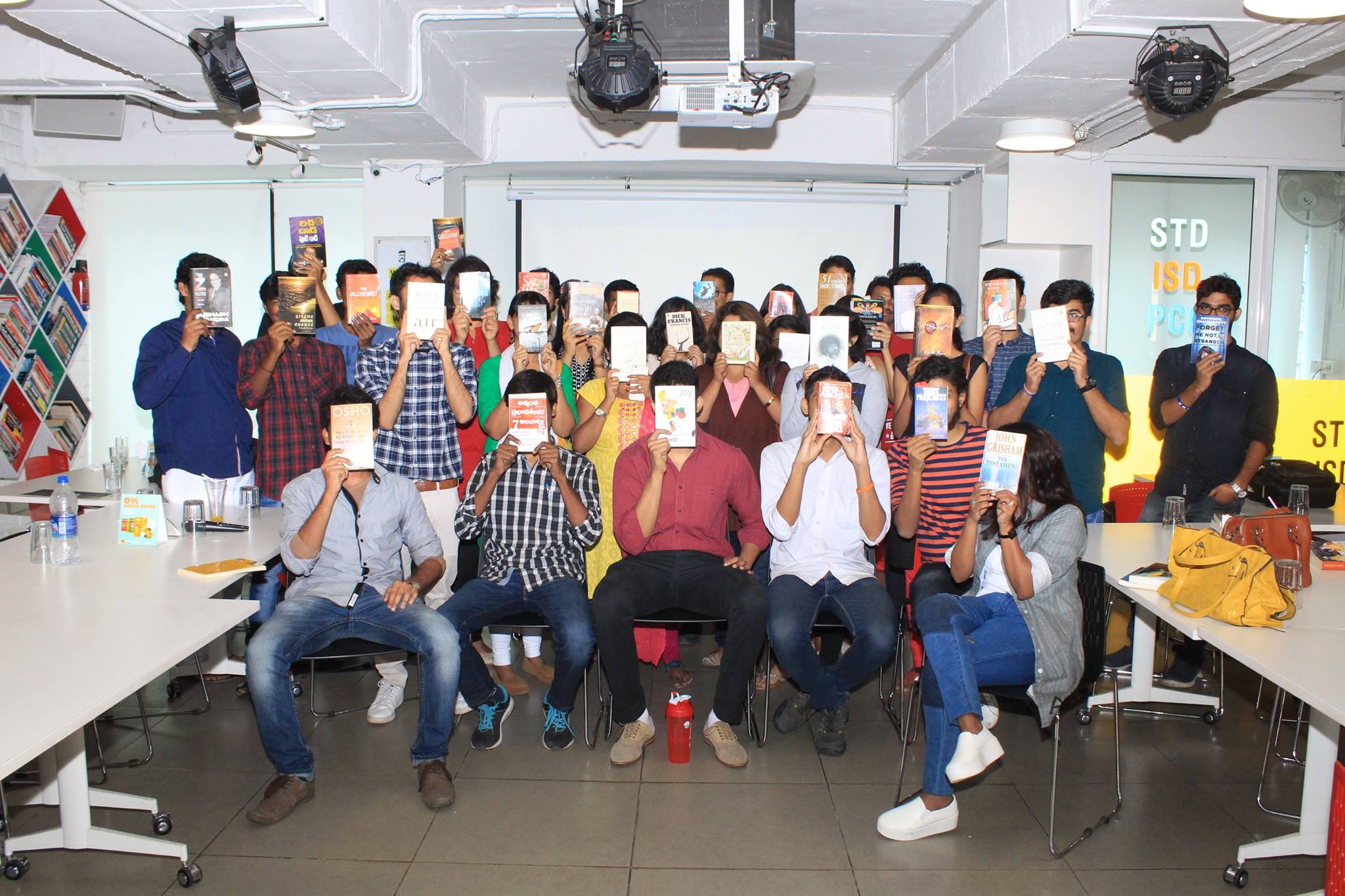
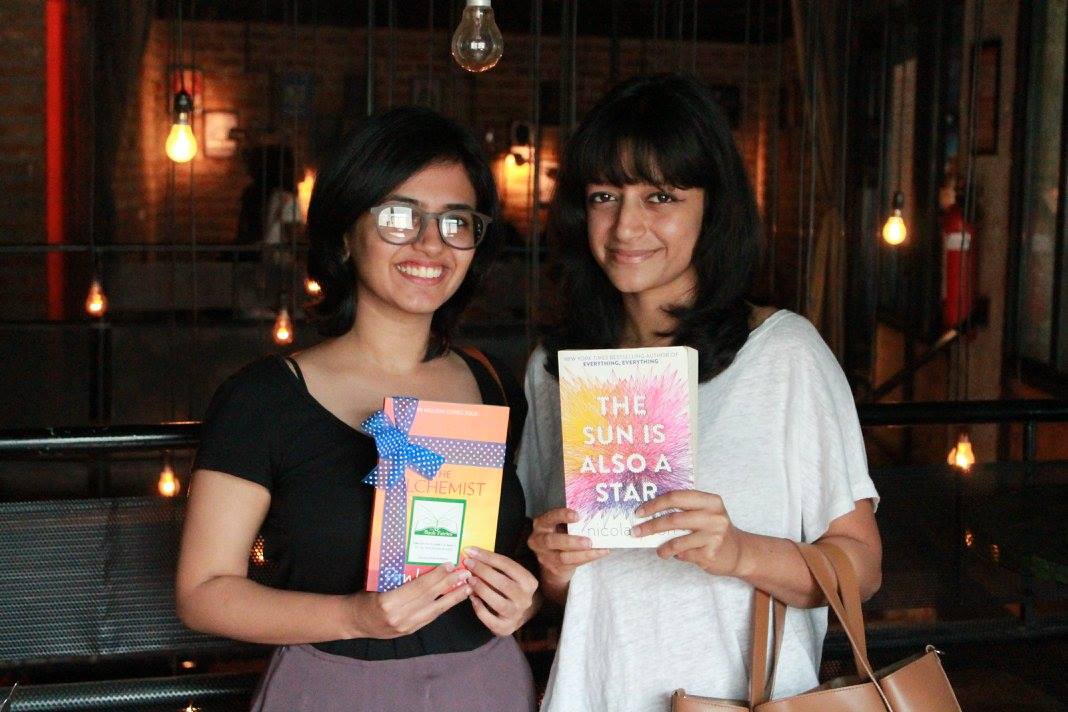
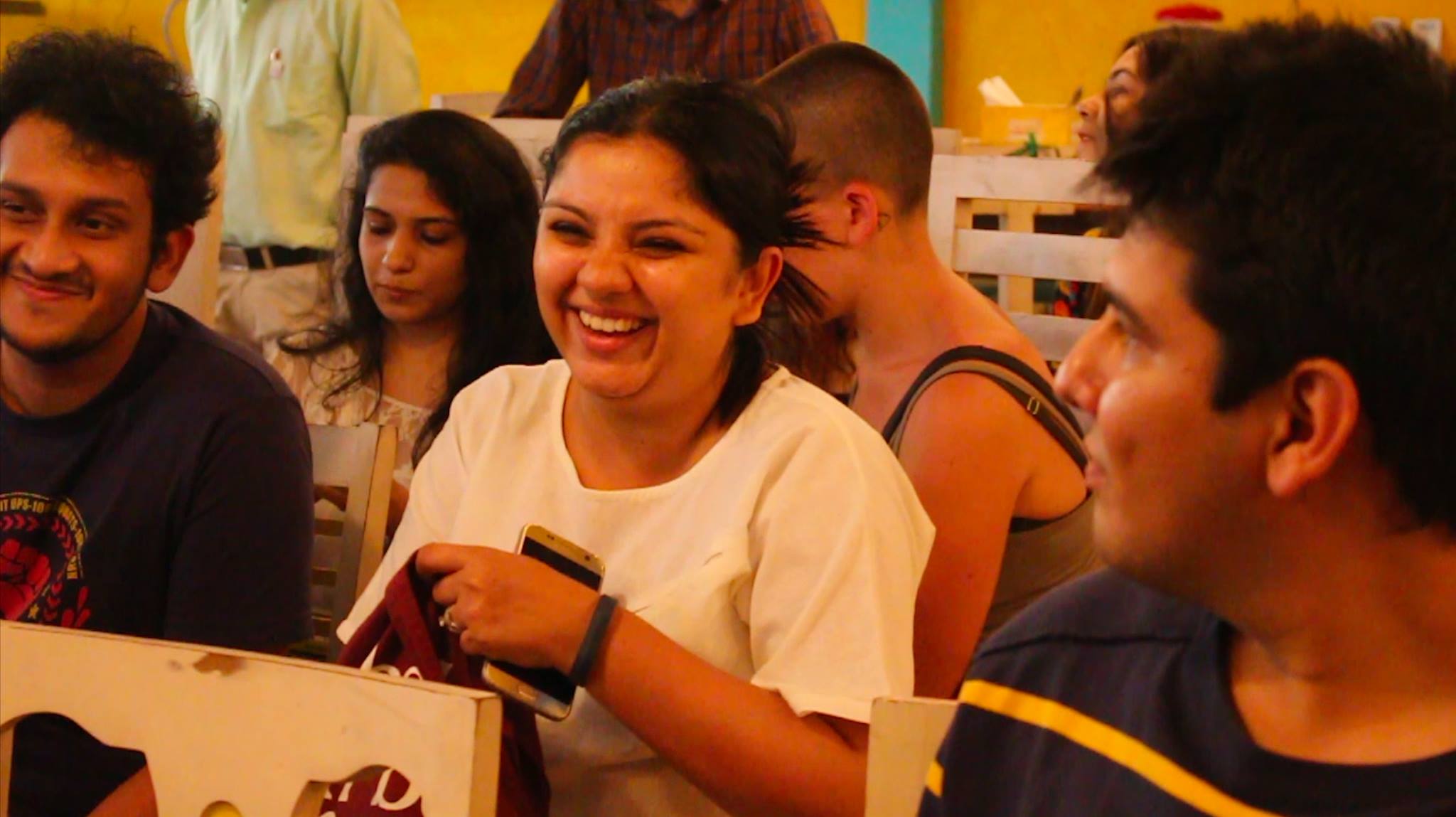
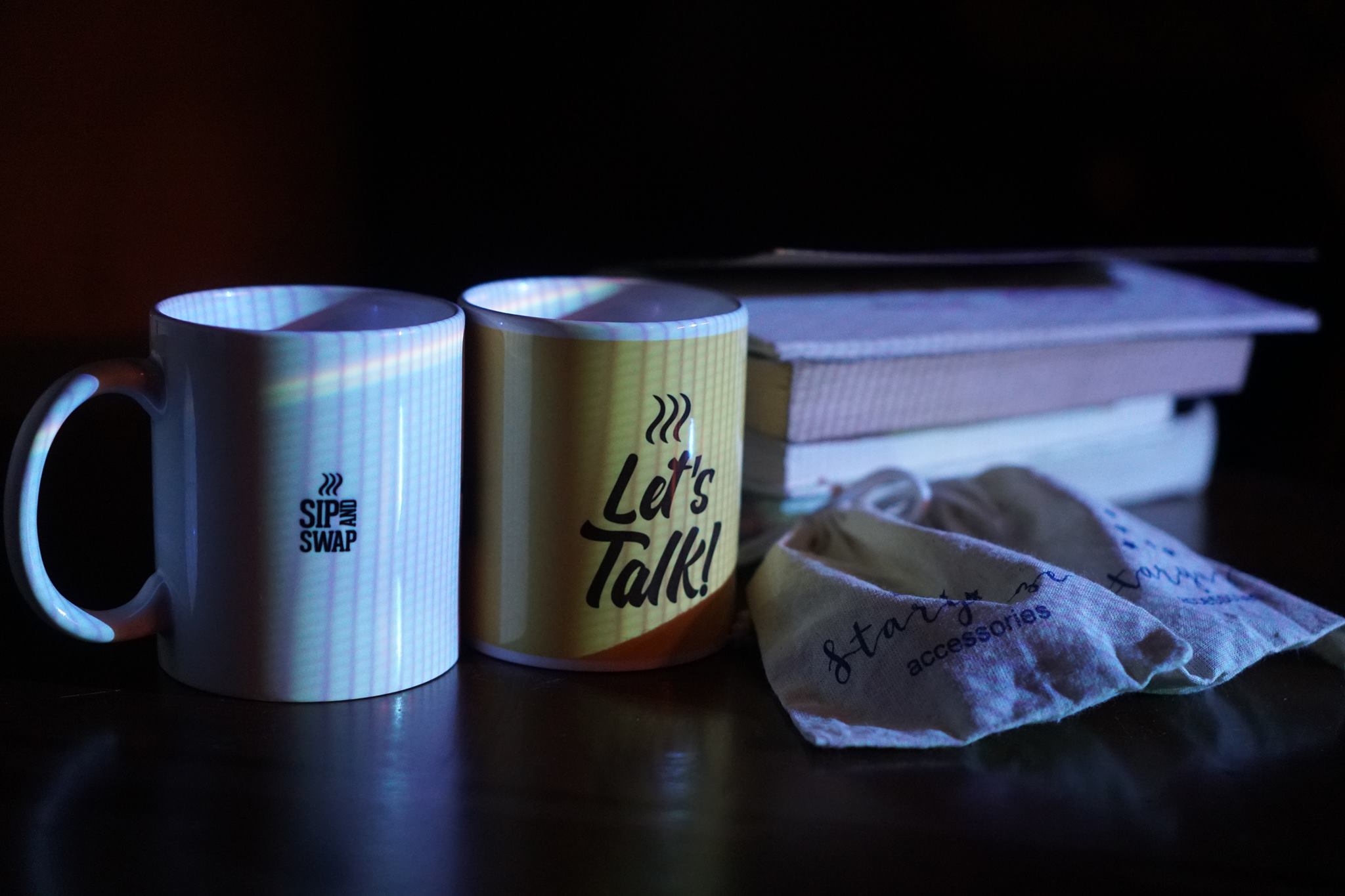
A handful of moments — group shots from across cities, the antiSOCIAL stage, the branded mugs, and a couple of attendee swaps in mid-pitch.

Press, Coverage & Where to Hear the Story
Sip and Swap earned a fair amount of organic coverage over its run — Mid-Day, a few other mainstream Indian outlets, and one long-form radio interview. I have the memory, the screenshots, and the offline cuttings; what I don't yet have on this page are the live URLs to all of them, because a lot of mid-2010s Indian press URLs have been re-architected, paywalled, or quietly deleted.
Here's what I can link to today, with a note on the gaps.
Editorial features




Radio interview (long-form)
- Ishq FM — Ishq Hangout with Sangy: Sip & Swap Founder Priyesh Thakkar with Sangy on Ishq Hangout. The unedited origin story, the format, the lessons — talked through in long-form. Audio hosted on SoundCloud.
Event listings & aggregator pages
Where Sip and Swap appeared on event-discovery platforms — proof of the run, but not full editorial features.
- Mumbai Live — Sip and Swap: Let's Talk! at antiSOCIAL
- LBB Mumbai — Sip And Swap: Let's…
- Insider.in — #TrySomethingNew: Sip n Swap Party (now redirects since Insider migrated to district.in)
- Events High — Sip And Swap: It's A Book Swap Party!
TL;DR
- Community-first inverts the build → launch → iterate cycle
- Pick one tactile mechanic, photo-first design, curated entry, cross-city playbook
- Have a monetisation hypothesis from event 3
- Write the playbook before you scale
- Design for succession, not heroes
If you're thinking about community-led growth for your brand, I'm happy to do a free 30-minute call. I'll share the actual Sip and Swap playbook docs we used.